



2026 Hyundai Tucson MPG: Gas vs. Hybrid vs. Plug-In Hybrid — Which Fits Your Inland Empire Drive?
Choosing the right 2026 Hyundai Tucson for your commute around Ontario, Fontana, or Rancho Cucamonga often comes down to one number: estimated MPG. The 2026 Tucson lineup gives you three different paths to efficiency — a traditional gas powertrain, a Hybrid, and a Plug-In Hybrid — each with its own EPA estimates, real-world strengths, and trade-offs. Here’s how they compare, with the verified 2026 figures straight from Hyundai.
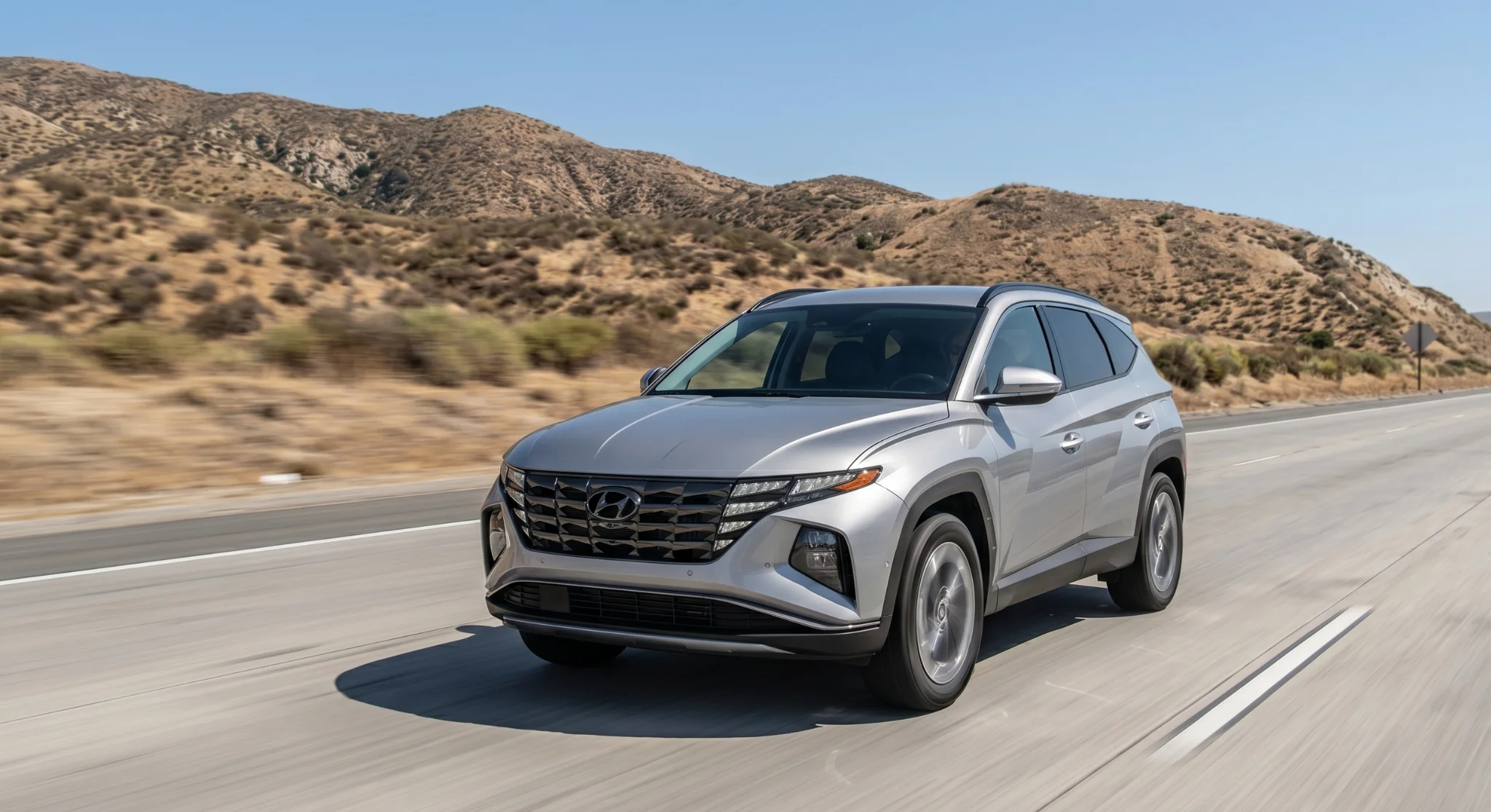
2026 Hyundai Tucson Lineup at a Glance
| Variant | Engine | Combined Power | Drivetrain |
|---|---|---|---|
| Tucson (Gas) | 2.5L 4-cylinder | 187 hp | FWD standard, HTRAC AWD optional |
| Tucson Hybrid | 1.6L turbo + electric motor | 231 hp combined | HTRAC AWD standard |
| Tucson Plug-In Hybrid | 1.6L turbo + electric motor | 268 hp combined | HTRAC AWD standard |
Each variant’s EPA-estimated fuel economy, range, and trim-by-trim detail is broken out below.
2026 Tucson Gas: The Practical Daily Driver
The standard 2026 Tucson runs a 2.5-liter four-cylinder engine producing 187 horsepower, paired with an 8-speed automatic transmission. Front-wheel drive is standard; HTRAC all-wheel drive is optional across all five trims (SE, SEL, XRT, SEL Premium, and Limited).
Fuel economy splits by drivetrain — a detail worth understanding before you choose:
- FWD Tucson: an estimated 25 city / 33 highway / 28 combined mpg
- AWD Tucson: an estimated 24 city / 30 highway / 26 combined mpg
For Inland Empire commuters splitting time between local errands and 10 freeway runs, FWD typically delivers the better number on paper. AWD is the call if winter trips to the mountains or wet-weather traction matter more to you than that 2 mpg combined.
The gas Tucson runs a 14.3-gallon fuel tank, which translates to a realistic range of around 400 miles per tank in FWD or 372 miles in AWD under mixed driving — plenty for a week of commuting around Fontana, Corona, and Rancho Cucamonga without thinking about the pump.
2026 Tucson Hybrid: Where the MPG Math Gets Interesting
The 2026 Tucson Hybrid pairs a turbocharged 1.6-liter four-cylinder with an electric motor for a combined 231 horsepower and 271 lb-ft of torque. HTRAC all-wheel drive is standard across all four hybrid trims, and a 6-speed automatic handles the gearwork.
EPA-estimated fuel economy also splits by trim — Hyundai engineered the entry-level Blue SE specifically for efficiency:
- Blue SE: an estimated 38 city / 38 highway / 38 combined mpg
- SEL, SEL Convenience, and Limited: an estimated 36 city / 37 highway / 36 combined mpg
Either way, the hybrid pulls noticeably ahead of the gas Tucson — anywhere from 8 to 12 mpg better combined depending on the trim you choose. For an Ontario-area driver covering 12,000 miles a year at $4.50/gallon, that gap is real money over the life of the vehicle, particularly in the stop-and-go traffic patterns common across the Inland Empire where the hybrid’s electric assist works hardest.
The 13.7-gallon fuel tank gives the hybrid an estimated range of around 521 miles on the Blue SE and roughly 493 miles on the other trims. Hyundai backs the hybrid battery with a 10-year / 100,000-mile warranty on top of the standard 5-year / 60,000-mile new vehicle warranty and 10-year / 100,000-mile powertrain coverage.
2026 Tucson Plug-In Hybrid: For Short Commutes That Use No Gas
The 2026 Tucson Plug-In Hybrid takes the hybrid powertrain further with a larger 13.8-kWh lithium-ion battery and a stronger electric motor, combining for 268 horsepower. The EPA-estimated all-electric range is 32 miles — enough that many daily commutes from Eastvale to Ontario or from Rancho Cucamonga to the 10 freeway business corridors can be completed without burning any gasoline at all.
When the battery is depleted, the Tucson PHEV runs as a standard hybrid using both engine and electric motor, returning an EPA-estimated 35 mpg combined. The EPA’s combined gas-and-electric fuel economy rating, which captures the overall efficiency of plug-in driving, is 77 MPGe.
Charging is straightforward. A Level 2 (240V) home charger fully recharges the battery in approximately two hours, making overnight charging easy for households that have or can install one. A standard 120V household outlet works too — it just takes longer (most owners report 10+ hours from empty). Both the SEL ($40,325 starting MSRP) and Limited ($48,550 starting MSRP) trims come standard with HTRAC all-wheel drive.
How Towing Affects Real-World Fuel Economy
The 2026 Tucson can tow up to 2,750 pounds in gas form with trailer brakes, and 2,000 pounds in either Hybrid or PHEV form. Adding a trailer or roof load increases weight and aerodynamic drag, which means the powertrain works harder and fuel economy drops — typically in the range of 15–25% when towing near maximum capacity, regardless of which Tucson you’re driving.
The hybrid and PHEV powertrains soften the hit somewhat thanks to electric assist on hills and during acceleration, but the underlying physics still apply. If towing is part of how you’ll use the Tucson, the gas model gives you the highest tow rating; if towing is occasional, the hybrid still handles a small utility trailer comfortably.
Maximizing MPG in Real Inland Empire Driving
A few simple habits help any 2026 Tucson — gas, hybrid, or plug-in — return its best numbers in actual use:
- Drive smoothly. Sharp acceleration and hard braking spike fuel use and (for hybrids) cut into regenerative braking. Steady inputs matter.
- Use Eco mode. Available on hybrid and PHEV trims, Eco mode adjusts throttle response and climate output to favor efficiency without making the cabin uncomfortable.
- Keep tires properly inflated. Underinflated tires increase rolling resistance and quietly cost you mpg. A monthly check is worth the minute.
- Skip the roof rack when you don’t need it. Aerodynamic drag is real — an empty roof box can cost a couple of mpg on the freeway.
Which 2026 Tucson Is Right for You?
If your priority is the lowest sticker price and simple ownership, the gas Tucson is the answer — particularly in FWD, where 28 estimated mpg combined makes it a strong value.
If you want a meaningful efficiency upgrade without changing how you fuel up, the Tucson Hybrid is the sweet spot — especially the Blue SE at an EPA-estimated 38 mpg combined, with standard AWD across the lineup.
If you have access to home charging and a daily commute under 32 miles, the Tucson Plug-In Hybrid can effectively eliminate gas use for most weekday driving while keeping the gas tank as a backup for road trips.
Come see the full 2026 Tucson lineup at Ontario Hyundai. Browse current 2026 Tucson inventory online, schedule a test drive in the variant that fits your driving, or check your trade-in value before you visit.
Disclaimer: All MPG and MPGe figures are EPA estimates for comparison purposes only. Your actual mileage will vary based on driving conditions, driving habits, vehicle condition, accessories, and other factors. All-electric range, charging times, and total range estimates are based on EPA testing and standard conditions, and may vary in real-world use. MSRP excludes freight (destination) charges, tax, title, license, and dealer fees. Starting MSRP figures shown are for base trim configurations and do not include optional equipment, packages, or accessories. Towing capacity figures require a properly equipped vehicle with trailer brakes where indicated; never exceed the manufacturer’s specified towing limits. Vehicle specifications, features, equipment, trim availability, and pricing are subject to change without notice. While information was accurate at the time of publication, please contact Ontario Hyundai directly for the most current vehicle specifications, available inventory, pricing, and warranty details.