



2026 Hyundai Santa Fe Hybrid MPG & Fuel Economy: A Complete Efficiency Guide
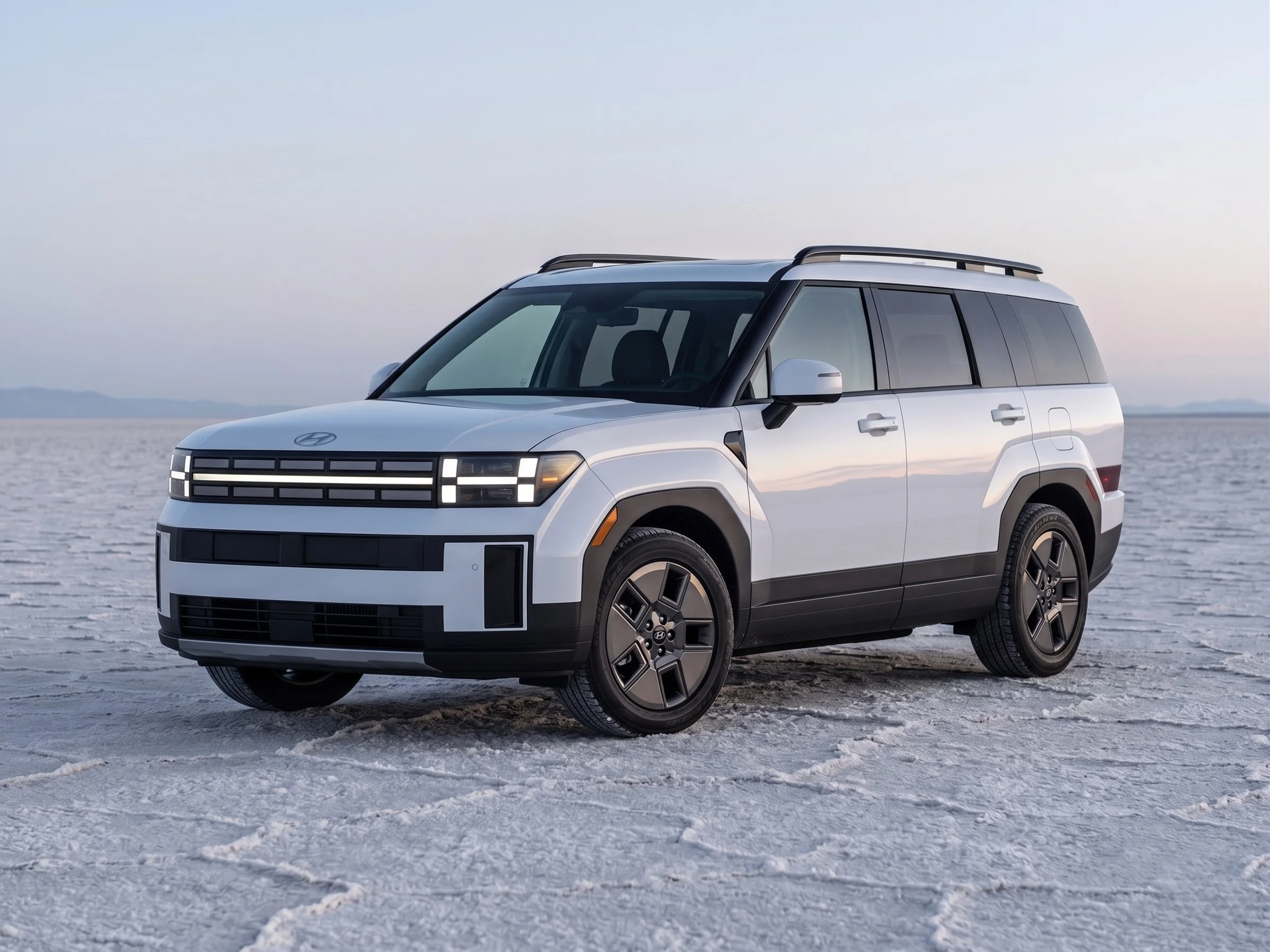
The 2026 Hyundai Santa Fe Hybrid is built for families who want three rows of seating without surrendering fuel economy. For 2026, the lineup becomes more accessible with a new SE Hybrid base trim joining the SEL, Limited, and Calligraphy. Every hybrid pairs a 1.6L turbocharged four-cylinder gas engine with an electric motor and a six-speed automatic transmission, producing a combined 231 horsepower and 271 lb-ft of torque available from 1,000 to 4,100 rpm. The result is smooth, responsive power and the kind of efficiency that makes daily Inland Empire commuting noticeably cheaper at the pump.
How Efficient Is the 2026 Santa Fe Hybrid?
Fuel economy is the headline, and it depends primarily on drivetrain. Front-wheel drive is standard on every trim; HTRAC all-wheel drive is available across the lineup for drivers who want extra traction.
| Drivetrain | Est. City | Est. Highway | Est. Combined |
|---|---|---|---|
| Front-Wheel Drive | 37 MPG | 36 MPG | 36 MPG |
| HTRAC All-Wheel Drive | 35 MPG | 34 MPG | 34 MPG |
EPA-estimated fuel economy. All trims. Actual mileage will vary with options, driving conditions, driving habits and your vehicle’s condition.
Front-wheel-drive Santa Fe Hybrid models carry an EPA-estimated 37 MPG city / 36 MPG highway / 36 MPG combined. Choosing HTRAC all-wheel drive brings the EPA-estimated rating to 35 MPG city / 34 MPG highway / 34 MPG combined — a modest trade for year-round confidence in changing road conditions. These figures hold across all four trims, so efficiency comes down to the drivetrain you select, not how much you spend.
How the Hybrid System Delivers Its Efficiency
The Santa Fe Hybrid’s efficiency comes from a tightly integrated powertrain. A permanent-magnet electric motor works alongside the turbocharged gas engine, and a 1.49 kWh lithium-ion battery stores energy recovered through regenerative braking — capturing momentum during deceleration that a conventional SUV would simply waste as heat. In low-speed driving, the system can lean on electric power, which is where hybrids shine in stop-and-go traffic.
Powertrain at a Glance
| Specification | Detail |
|---|---|
| Engine | 1.6L turbocharged 4-cylinder + electric motor |
| Combined Output | 231 horsepower |
| Combined Torque | 271 lb-ft (1,000–4,100 rpm) |
| Transmission | 6-speed automatic |
| Battery | 1.49 kWh lithium-ion |
| Drivetrain | Front-wheel drive standard; HTRAC AWD available |
| Fuel Tank | 17.7 gallons (regular unleaded) |
Drive Modes Tuned for Efficiency
Drivers can tailor the experience through HTRAC drive modes. Comfort, Eco, Sport, and Smart modes adjust throttle response and power delivery, with Eco prioritizing maximum efficiency and Sport sharpening response when you want it. For commuters who mix surface streets and freeway stretches in a single trip, that flexibility helps the Santa Fe Hybrid stay efficient across very different conditions.
What Affects Your Real-World MPG
EPA estimates are a standardized benchmark; your actual mileage varies with driving habits, climate, terrain, cargo load, and speed. Two factors are worth understanding on the Santa Fe Hybrid specifically.
Wheel Size
The SE and SEL Hybrid ride on 18-inch alloy wheels, while the Limited and Calligraphy step up to 20-inch wheels. Larger wheels can have a small effect on efficiency, so buyers focused purely on maximum MPG may prefer the lighter-rolling 18-inch setup.
Drivetrain
As the EPA figures show, front-wheel drive returns the best numbers. All-wheel drive costs roughly 2 MPG combined — meaningful over a year of driving, but often worth it for drivers who value traction.
With a 17.7-gallon fuel tank paired to these efficiency figures, the Santa Fe Hybrid is built for long stretches between fill-ups, which is part of what makes it appealing for road-tripping families.
Efficiency Without Compromising Space
A frequent question from shoppers is whether hybrid efficiency costs interior room. On the Santa Fe Hybrid, it doesn’t. Hyundai’s boxy, upright design and clever packaging — the compact battery tucks under the front passenger seat — preserve a genuinely spacious cabin. Total interior volume measures 165.6 cubic feet, with 44.4 inches of front legroom and 41.5 inches in the second row.
The third row offers 30 inches of legroom, which is more usable than many midsize three-row rivals provide.
Interior Space & Seating
| Measurement | Figure |
|---|---|
| Total Interior Volume | 165.6 cu. ft. |
| Front Legroom | 44.4 in. |
| Second-Row Legroom | 41.5 in. |
| Third-Row Legroom | 30.0 in. |
| Cargo Behind Third Row | 14.6 cu. ft. |
| Cargo Behind Second Row | 40.5 cu. ft. |
| Maximum Cargo (Seats Folded) | 79.6 cu. ft. |
The SE and SEL Hybrid seat seven with a second-row bench; the Limited offers a choice of bench or captain’s chairs, and the Calligraphy comes standard with second-row captain’s chairs, seating six.
Confident, Well-Equipped, and Safe
Efficiency is just one part of the story. The 2026 Santa Fe earned the Insurance Institute for Highway Safety’s TOP SAFETY PICK+, its highest designation, and Hyundai SmartSense driver assistance — including Forward Collision-Avoidance Assist, Lane Keeping Assist, Smart Cruise Control with Stop & Go, and Safe Exit Assist — is standard across the lineup.
Every trim includes a 12.3-inch touchscreen with wireless Apple CarPlay and Android Auto. Upper trims add a 12.3-inch digital instrument cluster, a 12-speaker Bose premium audio system (Limited and Calligraphy), and, on the Calligraphy, a windshield Head-up Display, Highway Driving Assist 2, and Remote Smart Parking Assist.
Warranty Coverage
| Coverage | Duration |
|---|---|
| New Vehicle Limited Warranty | 5 years / 60,000 miles |
| Powertrain Limited Warranty | 10 years / 100,000 miles |
| Hybrid Battery Warranty | 10 years / 100,000 miles |
| Roadside Assistance | 5 years / unlimited miles |
Hyundai’s coverage offers strong reassurance on the powertrain’s most specialized component — the hybrid battery. Warranty terms are subject to the conditions and limitations in the Hyundai warranty booklet. Note: Hyundai’s Complimentary Maintenance program does not apply to 2026 models.
A Smart Efficiency Play
As a conventional hybrid, the Santa Fe Hybrid recharges its own battery through the gas engine and regenerative braking — there’s no plug, no charging station, and no home charger required. It does not qualify for federal EV tax credits, but its combination of strong EPA-estimated efficiency, a long-range fuel tank, and Hyundai’s warranty coverage makes it a sensible long-term choice for efficiency-minded families.
Frequently Asked Questions
What is the 2026 Santa Fe Hybrid’s fuel economy?
Front-wheel-drive models earn an EPA-estimated 37 MPG city / 36 MPG highway / 36 MPG combined. With HTRAC all-wheel drive, the EPA-estimated rating is 35 MPG city / 34 MPG highway / 34 MPG combined. EPA estimates are for comparison purposes; actual mileage varies.
How does all-wheel drive affect fuel economy?
HTRAC AWD reduces efficiency by roughly 2 MPG combined, bringing the EPA-estimated figure to 34 MPG combined versus an EPA-estimated 36 MPG combined for front-wheel-drive models. Many Inland Empire drivers find the added traction worth the small trade-off.
Does the 2026 Santa Fe Hybrid need to be plugged in?
No. It’s a conventional hybrid, not a plug-in. The battery recharges automatically through the gas engine and regenerative braking, so you never need a charging station or home charger.
What is the total system horsepower?
The 1.6-liter turbocharged engine and electric motor combine for 231 horsepower and 271 lb-ft of torque, with strong low-end response thanks to the electric motor.
How many people does the Santa Fe Hybrid seat?
The SE and SEL Hybrid seat seven with a second-row bench. The Limited offers bench or captain’s chairs, and the Calligraphy seats six with standard second-row captain’s chairs.