



Summer EV Battery Care in SoCal Heat: Hyundai IONIQ 5 & IONIQ 9
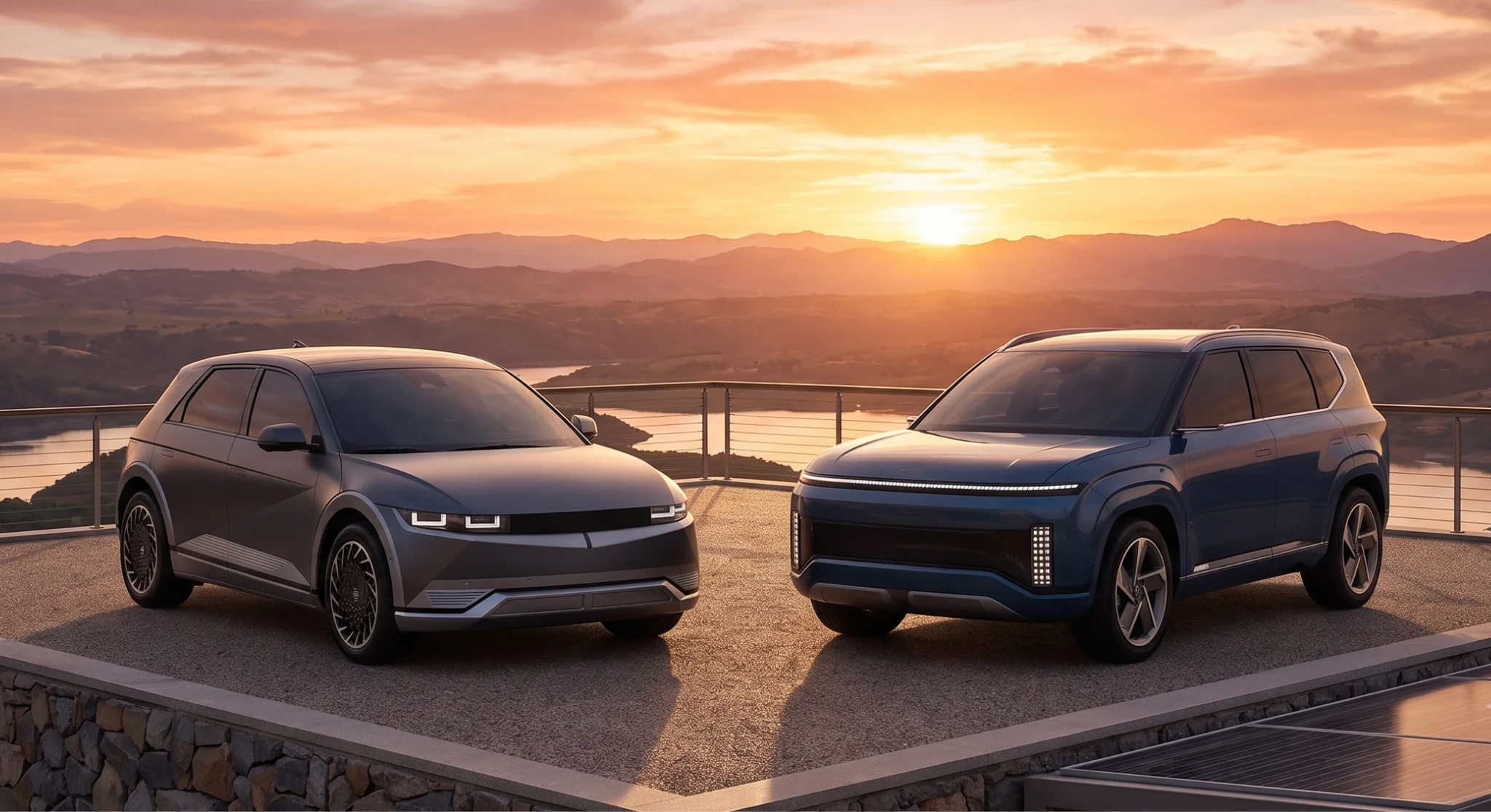
Extreme heat is as real a challenge for electric vehicle batteries as winter cold. During a hot Inland Empire summer, the high-voltage batteries in the 2026 Hyundai IONIQ 5 and 2026 IONIQ 9 operate under added thermal stress. Understanding how heat affects your battery — and the simple habits that protect it — helps you get the most range, the fastest charging, and the longest pack life out of your IONIQ.
How Summer Heat Affects Your IONIQ Battery
Lithium-ion cells work best in a moderate temperature window, and heat pushes them out of it — speeding up the chemical reactions inside the cells, which can hasten long-term capacity loss and temporarily trim range. To counter this, Hyundai’s E-GMP electric vehicles use an active liquid-cooling system with a dedicated battery chiller that circulates coolant through the pack. The table below summarizes how the vehicle responds across conditions.
| Temperature condition | Effect on the battery | What the IONIQ does about it |
|---|---|---|
| Ideal window (~68–77°F cell temp) | Best efficiency, range, and charging speed | Normal operation |
| High heat (above ~85°F) | Faster chemical aging; slight temporary range loss | Active liquid cooling circulates coolant through the pack |
| Fast charging while already hot | Extra heat generated by high power flow | Battery management system throttles charge power to protect cells |
Best Summer Charging and Driving Habits
Protecting your battery in the heat comes down to a handful of simple daily habits. Pre-cooling the cabin from the MyHyundai with Bluelink app while the vehicle is plugged in pulls energy from the grid rather than your pack, and when a road trip is coming, navigating to a DC fast charger in the built-in navigation lets the car precondition the battery for faster charging. The rest are easy to build into your routine. For more seasonal guidance, see our service & parts tips.
| Summer habit | Why it helps |
|---|---|
| Park in shade, a garage, or a carport | Blocks direct sun from heating the pack |
| Pre-cool the cabin while plugged in | Draws grid power instead of draining the battery |
| Keep daily charge around 20–80% | Less thermal and resistance stress than sitting at 100% |
| Precondition via nav-to-fast-charger | Prepares the battery for faster, cooler DC charging |
| Favor cooler morning/evening fast charging | Avoids peak-heat throttling of charge speed |
Cooling Down After a Hot-Weather Drive
After highway driving in summer heat, the pack holds a lot of accumulated thermal energy, and plugging in immediately only adds more. A few minutes of cool-down and a smart charging schedule make the whole cycle easier on the battery — and support the long-term pack life covered by Hyundai’s 10-year/100,000-mile Limited Battery Warranty (original owner; see warranty terms for details).
| Step after a hot drive | Benefit |
|---|---|
| Park in shade and let the pack cool before plugging in | Lowers starting cell temperature for the charge |
| Use scheduled charging for cooler overnight hours | Reduces heat generated during the charging cycle |
| Time the finish near your departure | Avoids long spells sitting full in the heat |
This information is provided for general educational purposes only and does not constitute legal advice. Warranty coverage depends on the specific terms of your vehicle’s warranty agreement. Consult your owner’s manual or a qualified legal professional for guidance on your individual situation.
Summer Heat and Your EV Running Costs
Southern California’s mild winters mean local drivers avoid severe cold-range losses, but summer heat still nudges operating costs up as air conditioning and battery cooling draw power. Two levers keep those costs down, as summarized below.
| Cost factor in summer | Impact | How to manage it |
|---|---|---|
| Air conditioning & battery cooling | Slightly lower efficiency (more kWh per mile) | Pre-cool while plugged in; park in shade |
| Electricity rate timing | Peak-hour rates cost more | Schedule charging for off-peak overnight hours |
| Stop-and-go city driving | Energy used accelerating | Regenerative braking recaptures deceleration energy |
Charging the IONIQ 5 vs. the Larger IONIQ 9
Does a bigger battery mean far longer charging stops? Not really. Both vehicles ride on Hyundai’s 800-volt E-GMP platform and both come with a native NACS port for direct Tesla Supercharger access plus a CCS adapter, so even the larger IONIQ 9 pack fast-charges in a similar window. Here is how the two compare.
| Spec | 2026 IONIQ 5 | 2026 IONIQ 9 |
|---|---|---|
| Battery capacity | 84 kWh Long Range (63 kWh Standard Range also offered) | 110.3 kWh (all trims) |
| Platform | 800V E-GMP | 800V E-GMP |
| Body style | Compact crossover, seats 5 | Three-row SUV, seats 6–7 |
| DC fast charge (10–80%, 350 kW) | ~18–20 minutes | ~24 minutes |
| Level 2 (240V, 10–100%) | ~7 hr 20 min (84 kWh models) | Under ~10 hours |
| Charge port | Native NACS + CCS adapter | Native NACS + CCS adapter |
Charging times are for ideal conditions and vary with station output, battery temperature, and state of charge. Actual results will differ.
Range and Efficiency by Trim
Both IONIQ models clear strong range figures, with rear-wheel-drive configurations delivering the highest EPA estimates and all-wheel-drive trims trading a little range for added traction. Summer heat and heavy air-conditioning use can trim real-world range, so treat these EPA figures as a comparison baseline.
| Model & configuration | EPA-Estimated range | EPA-Estimated efficiency (MPGe) |
|---|---|---|
| IONIQ 5 SE/SEL/Limited RWD (Long Range) | 318 miles | 114 combined |
| IONIQ 5 SE/SEL AWD | 290 miles | 106 combined |
| IONIQ 5 SE RWD (Standard Range) | 245 miles | 115 combined |
| IONIQ 9 S RWD (Long Range) | 335 miles | 92 combined |
| IONIQ 9 SE/SEL AWD | 320 miles | 88 combined |
| IONIQ 9 Limited/Calligraphy AWD | 311 miles | 85 combined |
EPA-estimated fuel economy figures are for comparison purposes only. Your actual mileage will vary depending on driving conditions, how you drive and maintain your vehicle, battery age/condition, and other factors.
Common Questions About Summer EV Care
How does extreme heat affect IONIQ 5 and IONIQ 9 battery health?
Heat accelerates the chemical aging of lithium-ion cells and can temporarily cut driving range. The active liquid-cooling system circulates coolant to keep cell temperatures in a safe range.
Can I pre-cool the cabin while the vehicle is plugged in?
Yes. Remote Climate Start in the MyHyundai with Bluelink app uses grid power while the vehicle is plugged in, so it cools the cabin without depleting your battery’s charge.
Why does my IONIQ fast-charge slower on hot afternoons?
This is normal behavior. The battery management system lowers charge power to protect hot cells. Charging in the cooler morning or evening is typically faster.
Should I let my EV cool before charging after a long hot drive?
Giving the pack time to shed driving heat, ideally parked in shade, reduces thermal stress at the start of the charging session.
What charge level is best in summer?
Keeping daily charging around 20–80% and avoiding long stretches sitting at 100% in the heat helps preserve pack health.
Enjoy Summer Driving in Your IONIQ
Beating Southern California summer heat is easy in a modern EV. Whether you are commuting across the Inland Empire or heading out for the weekend, the IONIQ lineup’s thermal management is built to deliver reliable performance and long-term battery protection. At Ontario Hyundai, our Hyundai-certified team is here to answer your EV questions and show you the latest features — and you can always schedule a visit when it is time for seasonal care. When you are ready to experience the instant torque and quiet comfort of the IONIQ 5 or IONIQ 9, visit us at 1307 Kettering Dr, Ontario, CA 91761.
Disclaimers
This information is provided for general educational purposes only and does not constitute legal advice. Warranty coverage depends on the specific terms of your vehicle’s warranty agreement. Consult your owner’s manual or a qualified legal professional for guidance on your individual situation.
Charging times are for ideal conditions and vary with station output, battery temperature, and state of charge. Actual results will differ.
EPA-estimated fuel economy figures are for comparison purposes only. Your actual mileage will vary depending on driving conditions, how you drive and maintain your vehicle, battery age/condition, and other factors.