



How Fast Does the 2026 Hyundai IONIQ 5 Charge on a DC Fast Charger?
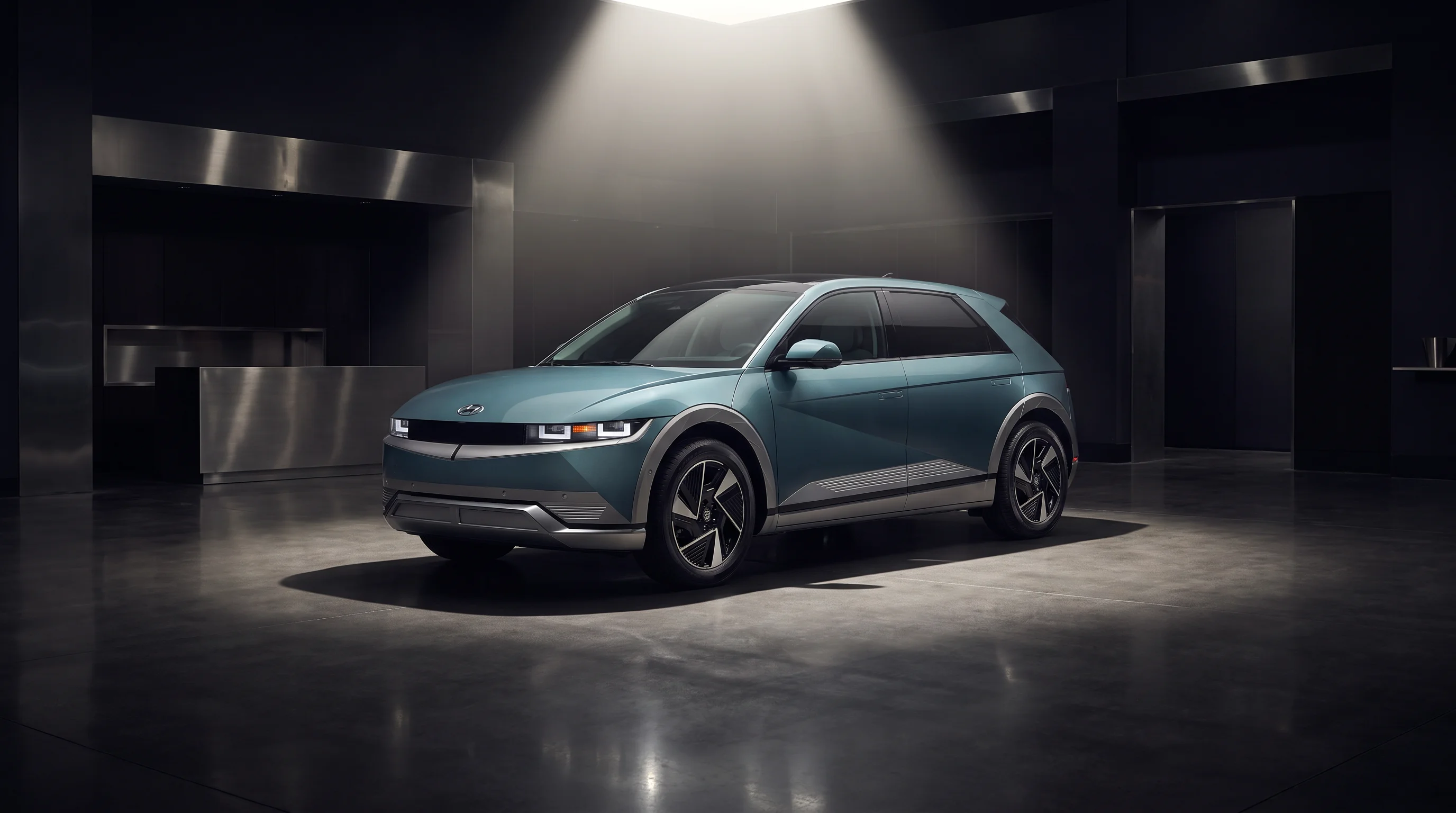
On a 350-kW, 800-volt DC ultra-fast charger, the 2026 Hyundai IONIQ 5 charges from 10% to 80% in approximately 20 minutes. That time uses the CCS adapter included with the vehicle. It is the spec that makes highway driving in an IONIQ 5 feel routine rather than planned.
The number behind that speed is voltage. The IONIQ 5 runs on Hyundai’s 800-volt E-GMP architecture. Higher system voltage lets energy move into the battery at greater power, with less heat and less current resistance. The practical result is that the IONIQ 5 holds high charging power across more of the session.
Every 2026 IONIQ 5 also arrives with a native North American Charging Standard port. Tesla Supercharger stations are a direct plug-in, with no adapter needed. The included CCS adapter keeps the older public networks available. Drivers in Ontario, Fontana, Rancho Cucamonga, Corona, and Eastvale can see the lineup in person. Call our EV team at (888) 653-8231 or stop by 1307 Kettering Dr.
2026 Hyundai IONIQ 5 Charging Times by Charger Type
How long a stop takes depends on two things. The first is the power of the station. The second is which battery your trim carries. The SE Standard Range uses a 63-kWh pack, while SE, SEL, XRT, and Limited all use the 84-kWh pack. Hyundai publishes charge times for both.
| Charger Type | 63-kWh Battery (SE Standard Range) | 84-kWh Battery (SE, SEL, XRT, Limited) |
|---|---|---|
| 350-kW DC ultra-fast (800V, with included CCS adapter), 10–80% | Approximately 20 minutes | Approximately 20 minutes |
| NACS DC fast charging, 150 kW (400V), including Tesla Superchargers, 10–80% | 24 minutes | 30 minutes |
| 50-kW DC fast charging with CCS adapter, 10–80% | 1 hour 1 minute | 1 hour 21 minutes |
| Level 2 AC, 240V, 10–100% | 5 hours 40 minutes | 7 hours 20 minutes |
Charging times are estimates. The U.S. Department of Transportation’s charger types and speeds guidance notes that Level 2 equipment charges a battery-electric vehicle to 80 percent from empty in 4 to 10 hours, while Level 1 can take 40 to 50 or more hours. Your results will vary by vehicle and equipment.
Battery Size and EPA-Estimated Range Across the Lineup
Charging speed matters most in relation to how far each configuration travels. Battery capacity and drivetrain set the EPA-estimated range. It runs from 245 miles on the SE Standard Range to 318 miles on the long-range rear-wheel-drive trims.
| Configuration | Battery | EPA-Estimated Range | EPA-Estimated MPGe (City / Hwy / Combined) |
|---|---|---|---|
| SE Standard Range RWD | 63 kWh | 245 miles | 131 / 100 / 115 |
| SE RWD, SEL RWD, Limited RWD | 84 kWh | 318 miles | 129 / 100 / 114 |
| SE AWD, SEL AWD | 84 kWh | 290 miles | 116 / 96 / 106 |
| Limited AWD | 84 kWh | 269 miles | 108 / 88 / 98 |
| XRT AWD | 84 kWh | 259 miles | 103 / 85 / 94 |
EPA-estimated fuel economy figures are for comparison purposes only. Your actual mileage will vary depending on driving conditions, how you drive and maintain your vehicle, battery age/condition, and other factors.
For a full breakdown of what separates each version, see our guide to 2026 IONIQ 5 trims and pricing. Shoppers cross-shopping the segment can also compare the 2026 IONIQ 5 against the Tesla Model Y. The high-performance IONIQ 5 N is a separate model with its own configuration.
Why You Should Stop Charging at 80%
Public fast-charging sessions are quoted from 10% to 80% for a reason. Lithium-ion cells accept high current most readily when the state of charge is low. As the pack fills, resistance and internal temperature rise. The battery management system then reduces intake power to protect cell health.
The practical effect is significant. As the U.S. Department of Transportation notes in its charging guidance, charging speed slows as the battery approaches full. The last 10 percent of a charge can take about as long as the first 90 percent. Ending your session at 80% gets you back on the road sooner. It also costs less at metered stations and keeps the charger free for the next driver.
How Temperature, Preconditioning, and NACS Access Affect Your Stop
Cold ambient temperatures slow the chemical reactions inside lithium-ion cells. That is why a winter fast-charging stop can take longer than the published figures. Three features shape what you actually experience.
Battery Preconditioning
Every IONIQ 5 includes a battery preconditioning function. It brings the pack toward its optimal thermal window before you arrive at a fast charger, so the battery can accept full power the moment you plug in.
Native NACS Port
The NACS port is standard across the 2026 lineup. It gives you direct access to compatible Tesla Supercharger stations without an adapter.
Included CCS Adapter
Hyundai supplies a CCS adapter with the vehicle, which preserves access to the existing public DC networks. It is also the adapter used for the 350-kW, 800-volt sessions where the IONIQ 5 is fastest.
Drivers heading into the foothills north of Rancho Cucamonga can set a fast-charging stop in the onboard navigation. The regenerative braking paddles recover energy on the descents.
Common Questions About 2026 Hyundai IONIQ 5 Charging
How does Level 2 home charging compare to DC fast charging?
Level 2 charging uses 240-volt AC power and the IONIQ 5’s 10.9-kW onboard charger, which is standard on all models. From 10% to 100%, Hyundai lists 7 hours and 20 minutes for the 84-kWh battery and 5 hours and 40 minutes for the 63-kWh battery, an overnight proposition. A 350-kW DC fast charger covers 10% to 80% in approximately 20 minutes instead, which is why DC fast charging is the road-trip tool and Level 2 is the daily one.
Charging times are estimates. The U.S. Department of Transportation’s charger types and speeds guidance notes that Level 2 equipment charges a battery-electric vehicle to 80 percent from empty in 4 to 10 hours, while Level 1 can take 40 to 50 or more hours. Your results will vary by vehicle and equipment.
Does the 2026 Hyundai IONIQ 5 need an adapter at Tesla Supercharger stations?
No. The 2026 IONIQ 5 has a native North American Charging Standard port built into the vehicle, so compatible Tesla Superchargers are a direct connection. Hyundai includes a CCS adapter for stations that still use CCS connectors.
What happens if I plug the IONIQ 5 into a standard 120-volt household outlet?
That is Level 1 charging, and it is a top-off method rather than a charging strategy. The U.S. Department of Transportation puts typical Level 1 output around 1 kW, adding roughly 2 to 5 miles of range per hour and taking 40 to 50 hours to bring a battery-electric vehicle to 80% from empty. A Level 2 home charger or a DC fast charger is the practical choice for daily driving.
How does the Hyundai IONIQ 5 battery warranty work?
The high-voltage lithium-ion battery is covered by Hyundai’s Hybrid/Electric Battery Warranty for 10 years or 100,000 miles, whichever comes first, separate from the 10-year/100,000-mile Powertrain Limited Warranty. Hyundai’s published terms cover defects in the factory workmanship or materials of the battery; coverage does not apply to lease and commercial vehicles or vehicles serviced or registered outside the U.S.
This information is provided for general educational purposes only and does not constitute legal advice. Warranty coverage depends on the specific terms of your vehicle’s warranty agreement. Consult your owner’s manual or a qualified legal professional for guidance on your individual situation.
Experience Fast Charging in the 2026 Hyundai IONIQ 5 at Ontario Hyundai
The 2026 IONIQ 5 pairs 800-volt ultra-fast charging and native Supercharger access with up to an EPA-estimated 318 miles of range. Our team can walk you through charging speeds, home charging setup, and which battery and drivetrain fit your commute. More EV guidance is available in our EV education hub.
Disclaimers
Charging times are estimates. The U.S. Department of Transportation’s charger types and speeds guidance notes that Level 2 equipment charges a battery-electric vehicle to 80 percent from empty in 4 to 10 hours, while Level 1 can take 40 to 50 or more hours. Your results will vary by vehicle and equipment.
EPA-estimated fuel economy figures are for comparison purposes only. Your actual mileage will vary depending on driving conditions, how you drive and maintain your vehicle, battery age/condition, and other factors.
This information is provided for general educational purposes only and does not constitute legal advice. Warranty coverage depends on the specific terms of your vehicle’s warranty agreement. Consult your owner’s manual or a qualified legal professional for guidance on your individual situation.